The greatest luxury is not the ability to travel anywhere, it is the freedom to feel completely at home wherever you are. With interiors and architecture we are used to creating something that is still and grounded in its existence, and when we approach marine design it is technically the opposite. At sea our surroundings are experienced in motion – light constantly shifts and the horizon becomes part of the ambiance. Because these vessels are so intimately shaped around the rituals, passions and lifestyles of their owners and loved ones, they often become testing grounds for new ways of living. Modern yachts are increasingly less focussed on opulence and ‘showboating,’ for lack of a better word, and more about creating a deeply personal and private environment.
The superyacht industry is often an early adopter of ideas that later find their way into residential design: private wellness spaces, seamless indoor-outdoor living and concealed technology have all become commonplace, trickling down from one highly bespoke environment to another.
This month, the international yachting community gathers first in Cannes, and then Monaco, offering a glimpse into the frontline of innovations shaping the future of marine design including our own involvement as one of the chosen interior designers for ULYSSIA. Later, the spotlight moves across the Atlantic to Fort Lauderdale, where the distinctly American perspective at life on the sea comes into focus.
Read on for our top considerations in marine design.

RESTRAINT
The definition of luxury itself is evolving. Where yacht interiors were once synonymous with overt grandeur, today there is a growing appreciation for restraint and beautifully considered detail. Every corridor, staircase, doorway and piece of furniture contributes to the experience, and there is very little room for elements that do not serve a purpose. This does not mean that interiors should feel minimal but rather quite the opposite – it means that every decision needs to be deeply considered and every element should have a reason for being there.
There is an understandable temptation within marine design to make everything as impressive as can be, but a yacht should never feel crowded with beautiful things – there needs to be space for the eye to rest. The scale and engineering of a superyacht naturally lend themselves to spectacle, but a quiet interior requires confidence; Instead of filling a room with decorative objects, perhaps one exceptional piece is enough. Instead of multiple competing materials, a single beautiful stone can become the focal point. Instead of an elaborate lighting scheme, carefully positioned pools of light can create a magical atmosphere.
The best interiors often have a sense of ease about them – nothing appears forced and nothing is trying too hard. The surroundings provide a powerful sense of drama with the movement of the water and the changing sky already creating an extraordinary visual experience that can’t be outdone.

SUSTAINABILITY
The marine and shipping industry faces increasingly complex challenges from propulsion and fuel consumption to materials, construction and lifecycle. Designers have an important role to play by considering not only how interiors look when delivered, but how responsibly they can be conceived and maintained. There is an opportunity to reconsider what luxury means – perhaps it is not about ‘more,’ but ‘better.’ A beautifully crafted piece made to last is more luxurious than something designed to be replaced. A material selected for its longevity and character can become more beautiful with age, while repurposing rare or meaningful materials can give an interior an emotional dimension that a new finish cannot replicate.

LONGEVITY
One of the most interesting changes within superyacht design is the extent to which the yacht has become an extension of the home. The industry continues to evolve rapidly, and its future will be defined less by size and spectacle and more by individuality. Owners are looking for spaces that reflect their lifestyles rather than a prescribed idea of what a yacht should be. For some, this may mean a sophisticated entertaining space designed around long lunches and dinners. For others, it may mean a quiet library, a private cinema, a highly developed wellness area or generous spaces for children and grandchildren. True luxury is not necessarily about having more. It is about having things that mean something.
The marine environment is demanding. Surfaces must be carefully selected for durability and performance, while retaining the tactility and richness expected of a luxury interior. This creates an interesting tension: materials must be technically appropriate, but they should never feel technical. The finest materials are therefore often those that feel natural rather than showy: timber with visible grain, stone with subtle movement, linens that soften the light and metals that develop character over time.
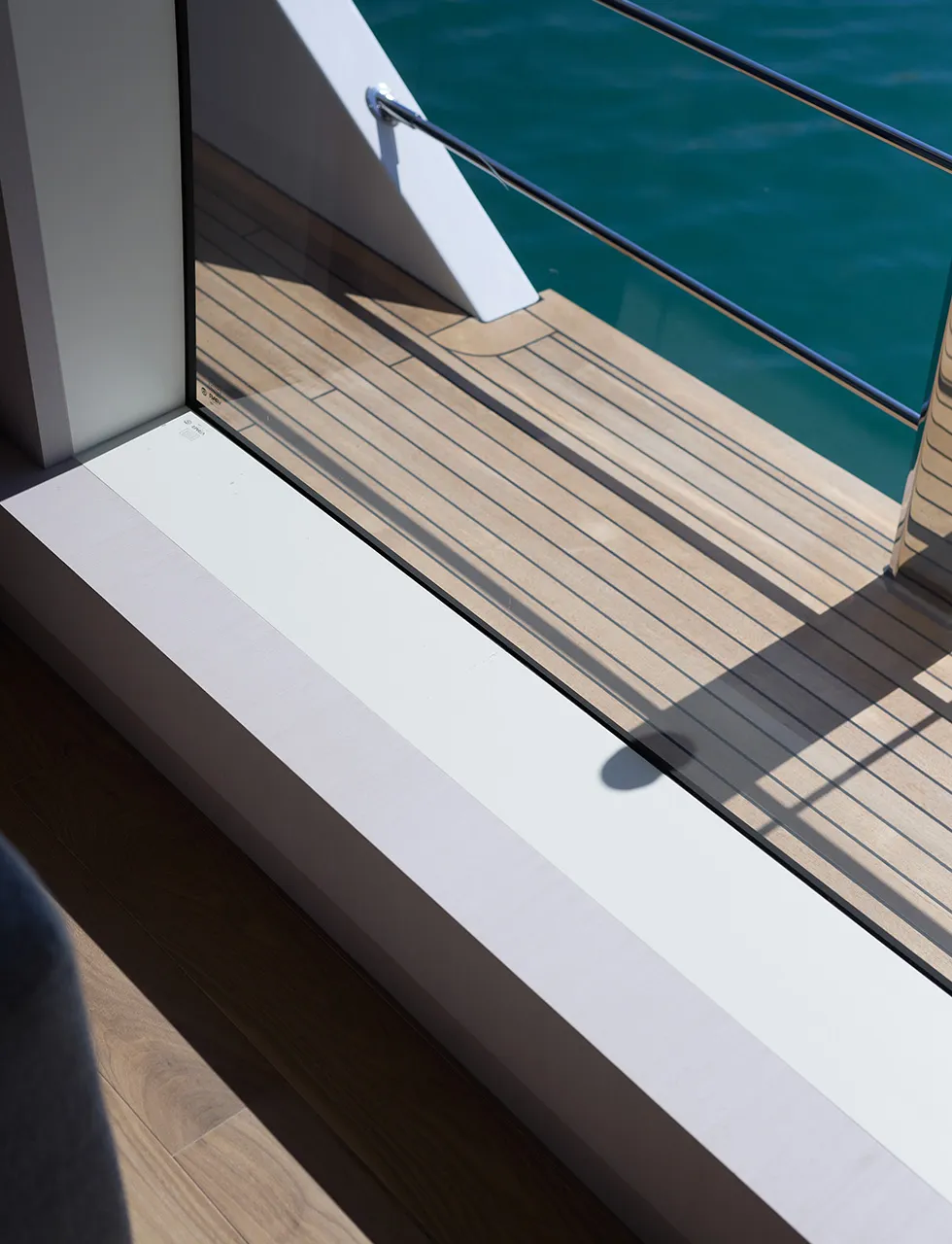
Ultimately, marine design is about more than interiors, it is about designing a journey. From the first moment of arrival to a quiet evening on deck, every transition can be considered.The superyacht industry is about pushing the boundaries and exploring the extraordinary. This autumn the Cannes Yachting Festival, Monaco Yacht Show and Fort Lauderdale International Boat Show will bring the international marine community together. These gatherings are not just about the latest launches, that are an opportunity to consider the future and to network. If you would like to meet or discuss a future marine design project, do reach out below.